

Nikkelvrij 3 min lezen
Nickel Allergy in Your Ears: 7 Symptoms You Shouldn't Ignore

In dit artikel
A red earlobe after a new earring. An itchy piercing that keeps pulling, even if the clasp isn't tight. A wet rim behind the stopper that won't dry out. These are not minor discomforts that will disappear on their own — they can indicate a nickel allergy. One in ten adults suffers from it, women more often than men. In this article, I list the seven clearest symptoms and explain how to switch to earrings that your ears *will* tolerate.
1. Redness that persists around the piercing
A slight pinkish discoloration in the first few hours after a new earring is normal — the skin reacts briefly to the change. If the edge turns bright red and the color persists for days, it's no longer just 'breaking in'. With a nickel allergy, the redness remains even after removal, often in a neat circle around the puncture.
2. Itching that only gets worse
A piercing that causes irritation a few days after insertion often clears up on its own after a night's rest without an earring. With an allergy, the itching actually increases *while* wearing it. Ask yourself honestly: do you feel, especially in the evening after a full day's work, that you'd rather unscrew the stopper? Then your skin is actively reacting to the metal.
3. A wet or damp spot behind the stopper
A dull, moist rim on the back of your earlobe — sometimes with a slightly yellowish layer — indicates contact eczema. Swap your earring for a 100% nickel-free pair for a few days, and you'll see it calm down within 72 hours. If it keeps returning with every cheaper pair, nickel is very likely the culprit.
4. Blisters or fine bumps on the earlobe
Some people develop small, clear blisters or a rough, grainy texture on the skin where the earring touches. This is allergic contact eczema in its classic form. Do not squeeze, do not scratch — the blister will dry out on its own once the metal is removed. If you also get it in non-pierced areas (e.g., from a necklace or bracelet), then the sensitivity is throughout your skin and not just on your ear.
5. An ear piercing that still 'weeps' after months
A fresh piercing can be slightly sensitive for up to six weeks. If it's still weeping after three months, something is fundamentally wrong. Very often, this is due to a nickel-containing post in cheap 'medical' starter kits. If we switch to a truly nickel-free pair like Whisper white or Ada snow, we usually see the weeping spot close within one to two weeks.
6. Thickening earlobe or a lump
With prolonged exposure, some skin reacts with thickening — an 'ear that looks thicker on one side' or a small, soft bump around the piercing. This is not a tumor, but it is a sign that the skin has been on alarm for months. Here, switching is no longer a luxury but a necessity.
7. Headaches, fatigue, or broader skin complaints
Less commonly known, but for some people, nickel allergy causes systemic symptoms: headaches after wearing, dry skin on other body parts, or eczema that flares up without clear cause. This doesn't always have to come from your earring, but in combination with the previous six signs, the chances are high.
What can you do today?
Have a GP or dermatologist perform a simple patch test if you want to be sure. In the meantime, avoid cheap fashion earrings and opt for materials whose composition you know. All Petit Bonbon earrings are 100% nickel-free, lead- and cadmium-free, and handmade in Dendermonde, precisely because we hear every day what a big difference it makes for sensitive ears. Start light: Kaia oat is a favorite entry-level earring for allergic customers. Also, read our guide on nickel-free earrings for sensitive ears for extra background, and see why inflamed earlobes can often be prevented.
This is general information and not medical advice. If in doubt, consult your GP or pharmacist.
Shop dit artikel

Kind to sensitive ears
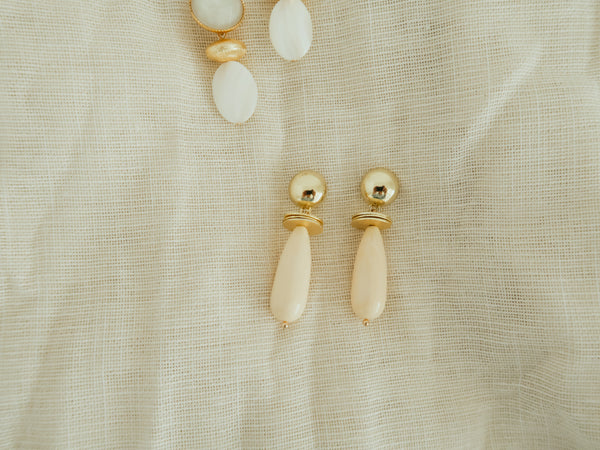
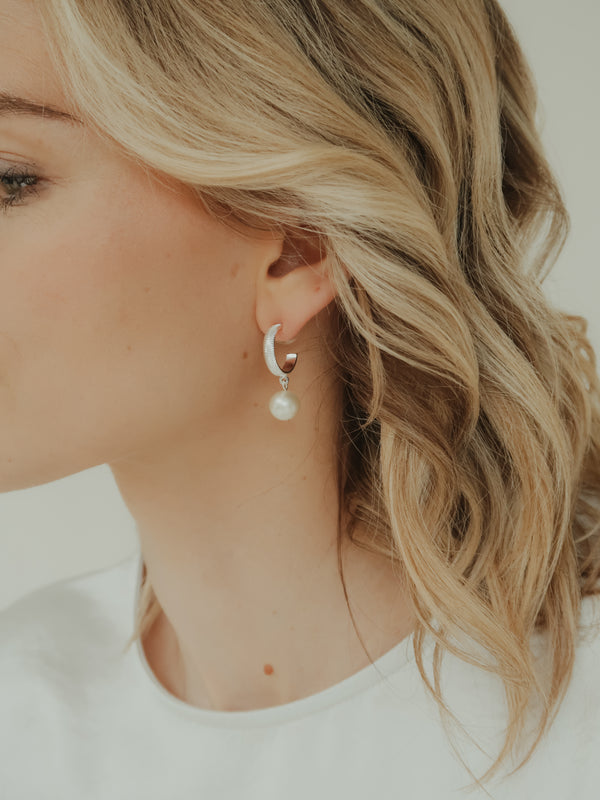
All Petit Bonbon earrings are 100% nickel-free, lead and cadmium-free — handmade in Dendermonde, made for comfortable daily wear.
Discover moreMake your outfit stand out
Handcrafted statement earrings






What truly makes handmade earrings unique?
Two earrings lying next to each other may look identical at first glance — and yet you're never entirely sure. With handmade jewelry, the real story is in the details: the slight push of a finger t...
Read more
Clip-on earrings that are comfortable — no pain after 1 hour
Almost everyone who has ever worn clip-on earrings knows the scenario: they feel fine in the store, after an hour at the party they start to pinch, and by the end of the evening, your earlobes are ...
Read more
Leave a comment